Zoeken
Filteren op
Type
Labels
Dossiers
Thema's
Afdelingen
Taal
Active filters
1737 zoekresultaten
Zoekresultaten
-
Evolutionary causes and consequences of human-commensalism in Eurasian Passer sparrows
Human activities have resulted in rapid global environmental change. An inability to respond to human-induced selection pressures has left much life on Earth threatened with disease, competition, and increased extinction risk. Despite this, a relatively small number of populations have adapted to thrive in human-modified environments as anthrodependents or human commensals. Whilst human commensalism has been observed in several common or charismatic species, the evolutionary causes and ecological consequences of this specific form of interaction remain largely unknown. In this project, we investigate the charismatic human-commensal species - the house sparrow.
-
Jong talent
Wij dragen graag bij aan het opleiden van de volgende generatie ecologische onderzoekers. Ontwikkelmogelijkheden voor zowel medewerkers als de medewerkers van de toekomst staan voorop. Hieronder lees je meer over diverse mogelijkheden voor (jong) talent.
-
Collega's aan het woord
Wat is het leukste aan werken bij NIOO?
-
Werkklimaat bij het NIOO
Bij het NIOO werken we samen met een diverse groep mensen aan onze strategische doelen.
-
Ons verhaal
We onderzoeken: ‘Ecology of Life’
-
Rapid evolutionary adaptation to multiple stressors: cross-tolerance or cross-inhibition?
Due to anthropogenic activities, the global environment is changing rapidly, and is expected to continue doing so over the coming decades. Many of these changes lead to increased levels of stress to living organisms with negative impacts on their natural populations. Rapid evolutionary adaptation is increasingly recognized as an important mechanism that increases the coping ability of multicellular organisms to deal with increased stress levels. Applying an experimental evolution approach with freshwater zooplankton, we aim at testing specific hypotheses related to the causes and consequences of rapid adaptation to increased stress levels (e.g. poor food quality, salinization, warming and copper contamination). Our recent research focuses strongly on a multiple stressor context and addresses questions such as whether adaptation to one stressor impedes or enhances abilities to cope with other stressors and how past selection regimes determine the evolutionary potential of populations to adapt to new stressors.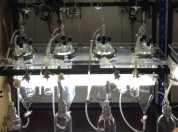
-
ClimatePursuit
Overleef jij 100 jaar klimaatverandering? Test het uit als koolmees, rat of paardenbloem in de serious game Climate Pursuit. Stijgende temperaturen, extremer weer en ook nog meer steden. Er is een hoop aan de hand in onze veranderende wereld. Probeer een eeuw te overleven door naar koelere gebieden in het noorden te trekken of via evolutie gunstige nieuwe eigenschappen te scoren.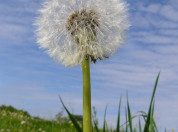
-
Anne Margreet Hazekamp
Department Secretary
-
SPI-Birds
SPI-Birds, or the Studies of Populations of Individuals – Birds, is a grassroots initiative connecting those working on populations of individually-marked breeding birds. On this website, you can learn more about the network, search for studies of birds across the world and access data via the SPI-Birds Repository. For more info on how to use the repository or join the network check the How-to pages.
-
Carola Buurman
Personnel/HRM Staff