

Zoeken
Filteren op
Type
Labels
Dossiers
Thema's
Afdelingen
Language
Active filters
1802 zoekresultaten
Zoekresultaten
-
Dandelion evolves along with hot city
City dandelions grow better in hot summers and flower better after mild winters than their rural counterparts. This is according to research by the Netherlands Institute of Ecology (NIOO-KNAW) that compared dandelions from the centre of Amsterdam with plants outside the city. These experiments - published in the December edition of Evolution Letters - show that dandelions evolved to adapt to urban heat. Such knowledge is essential for sustainable urban planning.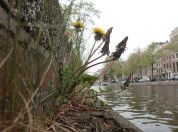
-
Maloti-Drakensberg Mountains
Metadata of the field study (MDM-1) at Maloti-Drakensberg Mountains (MDM), South Africa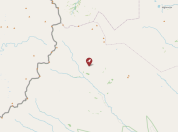
-
New Island
Metadata of the field study (NEW-1) at New Island (NEW), Falkland Islands (Malvinas)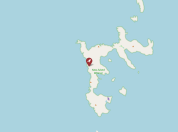
-
Paardenbloem evolueert mee met hete stad
Paardenbloemen uit de stad groeien beter in warme zomers en bloeien beter na zachte winters dan hun soortgenoten op het platteland. Dit blijkt uit onderzoek van het Nederlands Instituut voor Ecologie (NIOO-KNAW) dat paardenbloemen uit het centrum van Amsterdam vergeleek met planten buiten de stad. Deze experimenten – gepubliceerd in de decembereditie van Evolution Letters – tonen aan dat paardenbloemen zich evolutionair aanpassen aan stadshitte. Zulke kennis is essentieel voor duurzame stadsplanning.
-
Water op de kaart
Het overkoepelende doel van het project Water op de Kaart is om de ecologische waterkwaliteit in alle wateren te verbeteren, in grote én kleine wateren. Op deze pagina vindt u onder meer de Dataviewer, waarin we zoveel mogelijk beschikbare informatie over de waterkwaliteit in Nederland op één plek verzamelen.Waterkwaliteit raakt ons allemaal, van drinkwater tot natuur en recreatie. Maar hoe goed is het gesteld met het water in jouw omgeving? De Water op de Kaart Dataviewer brengt landelijke gegevens over waterkwaliteit toegankelijk en overzichtelijk samen op een kaart. Met één simpele klik krijg je inzicht in de toestand van het water op elke locatie in Nederland. Een waardevolle bron voor waterprofessionals, overheden, politici en nieuwsgierige burgers.
-
Nieuw hoofd van afdeling Terrestrische Ecologie: Ciska Veen
We are happy to welcome Ciska Veen as the new head of the department of Terrestrial Ecology of the Netherlands Institute of Ecology (NIOO-KNAW). Ciska will start on 1 February 2025.
-
New head of Terrestrial Ecology department: Ciska Veen
We are happy to welcome Ciska Veen as the new head of the department of Terrestrial Ecology of the Netherlands Institute of Ecology (NIOO-KNAW). Ciska will start on 1 February 2025.
-
NPEC – Plant-Microbe Interaction Phenotyping
The Plant-Microbe-Interaction Phenotyping Module consists of two independent phenotyping installations designed for high-throughput phenotyping of the plant shoot (Helios) and in-vitro root system (Hades).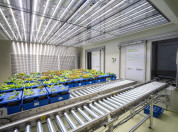
-
NPEC – Multi-Environment Climate Chambers
NPEC’s Multi-Environment Climate Chambers Module hosts a series of 15 small climate chambers with the highest level of homogeneity in temperature, humidity, and light intensity available.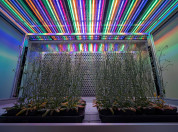
-
Aan de slag met biodiversiteit in de bollenteelt
De poster ‘Aan de slag met biodiversiteit in de bollenteelt’ zet biodiversiteit in de bollenteelt op de kaart. Tijdens een kennisochtend over biodiversiteit in de Bollenstreek op donderdag 21 november bood Cassandra van Altena van Living Lab B7 de poster aan Hester Maij, voorzitter van de Koninklijke Algemeene Vereeniging voor Bloembollencultuur (KAVB) aan. Het is een inspiratiebron voor telers, met ideeën zoals het aanleggen van wintervoedselakkers als voedsel- en schuilplek voor ‘bollenvogels’.