Droevendaalsesteeg 10
6708 PB Wageningen
The Netherlands
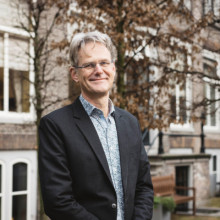
My research focus is on Ecohydrology and I aim to work on integrated solutions on sustainable water, sustainable land and halting biodiversity loss.
Stefan Dekker is director of NIOO-KNAW, the Netherlands Institute of Ecology. He is also professor of Ecohydrology at the Copernicus Institute of Sustainable Development at Utrecht University. His main research lines are:
1. To fundamentally understand the direct drivers of interactions between the atmosphere, biosphere and hydrosphere. He hereby aims (i) to understand the resilience and water use of current and future forest types, including the role of forestation and deforestation and (ii) to fundamentally understand how plants adapt to changes in carbon, nutrient and water resources, and how those processes can be upscaled.
2. Understanding how indirect drivers impact the interactions between atmosphere, hydrosphere and biosphere. Indirect drivers play a major role in influencing direct drivers of biodiversity loss, ecosystem change and the ecohydrological processes. Therefore, socio-economic and demographic development, but also sustainable and technological innovations are important to include in future scenarios.
Stefan Dekker studied physical geography at the University of Amsterdam and he did his PhD at the Institute of Biodiversity and Ecosystem Dynamics (UvA-IBED) on forest ecohydrology. After his graduation, Stefan was staff member at Utrecht University, the Copernicus Institute of Sustainable Development. He successfully supervised 20 PhD candidates, was full professor of Global Ecohydrology and Sustainability and was visiting professor at the Max Planck Institute for Meteorology, Exeter University and Stockholm Resilience Center.
Dekker was director of education and director of research at the department of Sustainable Development in Utrecht between 2019 and 2025 and was head of the Environmental Sciences group at the Open Universiteit from 2018 to 2019.
The consequences of mangrove degradation, including biodiversity loss and the decline of associated ecosystem services (ES), have created a global urgency to protect mangroves through more integrated approaches such as Nature-based Solutions (NbS). NbS are increasingly promoted to address these challenges; however, there is still a lack of studies that synthesize current knowledge on the role of mangrove NbS in delivering ES and supporting human well-being. Through a systematic review, this study identifies and expands the knowledge of four key ES outcomes of mangrove NbS: coastal protection, sediment regulation, climate regulation, and habitat and biodiversity. However, only a small fraction of the literature provides empirical evidence linking these services to welfare benefits, underscoring the complexity of NbS–ES–well-being relationships within dynamic social–ecological systems. We propose a framework that highlights institutions and governance, and complementary socio-economic actions as critical enablers for translating NbS interventions into broader social and ecological benefits. Looking ahead, advancing mangrove NbS science and practice, particularly in the Global South, will require transdisciplinary, multi-stakeholder, and North–South collaborations to co-produce contextually relevant and actionable knowledge that bridges science, policy, and practice.
Watershed restoration is widely promoted as a strategy for climate adaptation and land degradation control, yet long-term uptake and maintenance of restoration practices remain persistent challenges. This study focuses on Oromia, Ethiopia, examining how continuity, durability, and scalability of restoration practices are shaped by interactions between key barriers and enabling conditions across governance levels. Drawing on qualitative focus group discussions with 43 participants, including farmers, local administrators, technical experts, and policy actors across three woredas in Arsi Zone, the analysis identifies three cross-cutting clusters: planning quality, ownership and engagement, and coordination and accountability. The findings show that in Oromia, weaknesses in planning processes, particularly a campaign-based, top-down and quota-driven approach, constrain contextual adaptation, learning, and agroecological fit, among other factors. Barriers related to ownership and engagement highlight that in Oromia's watershed campaigns, participation is frequently short-term and incentive-driven with limited collective responsibility for sustaining structures and practices beyond short-term mobilisation. Challenges in coordination and accountability in Oromia, including fragmented mandates across governance levels and monitoring systems oriented toward upward reporting rather than horizontal learning, undermine credibility and adaptive capacity after campaign periods. Across these clusters, the interaction between barriers and enabling conditions gives rise to pathways that shape whether restoration efforts translate into sustained land-use change. Taken together, the results suggest that improving restoration outcomes in Oromia require system-level shifts aligning planning processes, community ownership arrangements, and institutional accountability mechanisms. The study highlights locally led climate adaptation as a practical entry point through site-specific planning, locally grounded monitoring, and social learning.
Internationally, it has been agreed to halt and reverse biodiversity loss, a commitment partly underpinned by model-based scenario analyses showing that bending the trend is possible. These scenarios provide insights into alternative future biodiversity trends and their drivers. Our meta-analysis differentiates scenarios that project biodiversity loss and that halt or reverse the trend based on their quantitative outcomes and explores their key characteristics such as scenario assumptions, drivers of loss, biodiversity indicators and models used. We found that bending-the-curve studies are scarce, and mostly do no account for climate change, which risks suggesting that the trend can be bent too easily. Our findings indicate that bending is only achievable with integrated efforts across different sectors, such as nature conservation, sustainable food production, diet change, and reduced food waste. To better support policymaking, scenarios should be based on model intercomparisons and use standardize indicators to allow comparisons across studies, account for additional drivers of loss to represent the real threats to biodiversity, and include more ambitious cross-sectoral actions to effectively bend the curve.
Pesticide use has significant advantages in modern agricultural production. However, it can negatively impact human health and ecosystems. Yet, no scenarios exist for possible future pesticide use. We fill this knowledge gap by developing global pesticide use scenarios following the storylines of four Shared Socioeconomic Pathways (SSPs) for six crop types and two pesticides, glyphosate and chlorpyrifos. The global pesticide use scenarios are developed by combining map-based pesticide application rates from the PEST-CHEMGRIDS database with crop harvested area projections from the IMAGE 3.3 integrated assessment model. Crop-specific pesticide use maps identify China, South America, Africa, the USA, and South Asia as future hotspots of pesticide use. Pesticide use increases in SSP2 and SSP3, ranging from 5.2 to 6.5 million tonnes for vegetables and fruits in 2050. Glyphosate use shows an upsurge in SSP2 and SSP3 across global regions, while overall chlorpyrifos use decreases in SSP3, except in some regions. SSP1 shows a reduction in pesticide use by 2050 for certain crops, ranging from −40% for rice to −8% for vegetables and fruits, due to higher environmental regulation, awareness, and technology acceptance, thereby leading to lower pesticide application. Combining SSP1 with the implementation of the low-meat Eat-Lancet diet leads to a reduction in global pesticide use in feed crops such as maize (5.6%↘), wheat (18.9%↘), rice (52.6%↘), soybeans (23.5%↘), and other crops (17.8%↘). These results show that transitioning away from a meat-intensive diet and reducing food waste can reduce pesticide use.
The Mediterranean Basin is identified as a climate change hotspot and prone to future drying. Through carbon sequestration, forests may mitigate climate change and reduce future drying. Nevertheless, the effect of forests on freshwater availability in the Mediterranean Basin is uncertain. Trees contribute to enhanced evapotranspiration, which may enhance drying; the resulting impact on precipitation in the Mediterranean Basin, however, remains unclear. Here we use a simple model to simulate the development of the atmospheric boundary layer (ABL) to determine the impact of forest on convective rainfall potential. There is convective rainfall potential when (1) the ABL reaches the lifting condensation level, and (2) there is sufficient convective available potential energy. We model the ABL development over the Mediterranean Basin for a bare soil scenario (covered fully with bare soil) and a forest scenario (covered fully with forest) to determine its land cover sensitivity. In addition, we examine the sensitivity of the ABL to variations in soil moisture for the forest scenario specifically. We identify two distinct responses to forest in the Mediterranean Basin dependent on soil moisture content. Forest contributes to warming and drying in relatively dry regions (low soil moisture content) and to cooling and wetting in relatively wet regions (high soil moisture content). We find that both forest cover and soil moisture contribute to convective rainfall potential. In regions with a relatively high soil moisture content, forest cover positively influences both the convective available potential energy, and the crossing of the ABL and lifting condensation level. The results suggest that forestation in the Mediterranean Basin may contribute to local precipitation in relatively wet regions and reduce local precipitation in relatively dry regions.