Search
Filter by
Type
Tags
Dossiers
Themes
Departments
Active filters
1072 search results
Search results
-
BioClock
Our night sky is heavily light-polluted which has a far-reaching impact on our ecosystem, changing daily and seasonal timing of a multitude of organisms we share our environment with. At the NIOO-KNAW, we team up with ecologists and chronobiologists all across the Netherlands to restore healthy rhythms for ourselves and in our natural environment.
-
Raúl Ochoa-Hueso
Honorary Fellow
-
What makes innovative animals innovative?
Innovation ability allows animals to invent plastic behavioural responses to various novel ecological challenges, thereby making it possible to exploit new resources. Until now, studies have generally focused on innovation ability as a factor on its own and very little is known about how various cognitive and behavioural traits co-operate in their effect on innovation ability. These traits may be cognitive and behavioural specializations, meaning they have evolved for specific functions other than innovation, but act together to allow animals to innovate. The behavioural and cognitive traits that may affect innovation ability will vary between species and between populations of the same species living in different environments. My main purpose in this project is to try, by as many means as possible, to pinpoint core differences between innovators and non-innovators. I aim to do this by making both inter- and intraspecific comparisons of performance in cognitive and behavioural essays in three species from Paridae family.
-
HabQual: Habitat matching or local adaptation: how does habitat quality drive variation in cognitive traits
This project will help us to predict the limits for species to adapt to changes in habitat characteristics, which is especially important in the light of actual ecological impacts of habitat changes worldwide.
-
Evolutionary causes and consequences of human-commensalism in Eurasian Passer sparrows
Human activities have resulted in rapid global environmental change. An inability to respond to human-induced selection pressures has left much life on Earth threatened with disease, competition, and increased extinction risk. Despite this, a relatively small number of populations have adapted to thrive in human-modified environments as anthrodependents or human commensals. Whilst human commensalism has been observed in several common or charismatic species, the evolutionary causes and ecological consequences of this specific form of interaction remain largely unknown. In this project, we investigate the charismatic human-commensal species - the house sparrow.
-
Rapid evolutionary adaptation to multiple stressors: cross-tolerance or cross-inhibition?
Due to anthropogenic activities, the global environment is changing rapidly, and is expected to continue doing so over the coming decades. Many of these changes lead to increased levels of stress to living organisms with negative impacts on their natural populations. Rapid evolutionary adaptation is increasingly recognized as an important mechanism that increases the coping ability of multicellular organisms to deal with increased stress levels. Applying an experimental evolution approach with freshwater zooplankton, we aim at testing specific hypotheses related to the causes and consequences of rapid adaptation to increased stress levels (e.g. poor food quality, salinization, warming and copper contamination). Our recent research focuses strongly on a multiple stressor context and addresses questions such as whether adaptation to one stressor impedes or enhances abilities to cope with other stressors and how past selection regimes determine the evolutionary potential of populations to adapt to new stressors.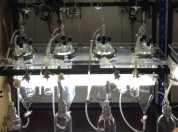
-
Anne Margreet Hazekamp
Department Secretary
-
SPI-Birds
SPI-Birds, or the Studies of Populations of Individuals – Birds, is a grassroots initiative connecting those working on populations of individually-marked breeding birds. On this website, you can learn more about the network, search for studies of birds across the world and access data via the SPI-Birds Repository. For more info on how to use the repository or join the network check the How-to pages.
-
Carola Buurman
Personnel/HRM Staff