Investigating natal dispersal of Barnacle Geese using GPS data (Engelse tekst)
Investigating natal dispersal of Barnacle Geese using GPS data (Engelse tekst)
DierecologieContact Person:

Droevendaalsesteeg 10
6708 PB Wageningen
Project description
How do young birds decide when to leave home, where to go, and where to breed? Understanding natal dispersal is important because it impacts spatial distribution, gene flow and population dynamics, with implications for conservation and management.
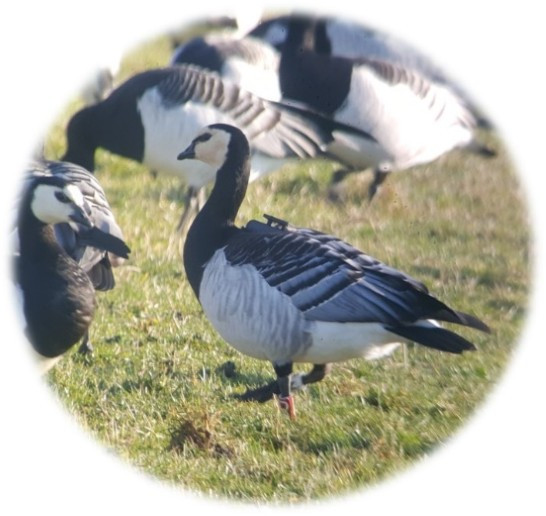
In 2024, forty locally hatched Barnacle Geese in the Dutch Delta were equipped with Global Positioning System (GPS) trackers. This project will use two years of movement data to investigate when young geese leave their natal population, the routes they follow, and where they settle to breed.
The student will visualise movement trajectories, identify natal dispersal events, and investigate settlement patterns within the Netherlands and beyond. This project will build on recent research based on ringing data (de Vries et al., 2025), providing new insights into the timing, routes and locations of natal dispersal
This project offers an opportunity to work with a unique GPS tracking dataset while developing skills in movement ecology, data visualisation and data analysis. There will be flexibility to refine the research questions according to the student’s interests.
Candidate profile
- Background in biology, ecology, statistics, or a related field
- Experience using R
- Interest in animal movement, biologging, and data analysis
- Proficiency in English
- Experience with GIS or spatial data is advantageous but not required
Details
- Duration: Minimum of four months (full-time)
- Start date: September 2026 or later
- Location: Netherlands Institute of Ecology (NIOO-KNAW), Wageningen
- Supervision team: Dr Henk van der Jeugd (NIOO), Dr Kareemah Chopra (NIOO), Dr Bruce Yu (Deakin University and Druid Technology Co. Ltd)
Contact & application Please email Henk van der Jeugd h.vanderjeugd@nioo.knaw.nl and Kareemah Chopra k.chopra@nioo.knaw.nl to express your interest, indicate how your background aligns with the position, and learn more about the project.
Key literature
De Vries, E. H. J., Boom, M. P., Nolet, B. A., Jongejans, E., & van der Jeugd, H. P. (2025). Long‐distance dispersal is asymmetrical with respect to age, sex and breeding latitude in a long‐lived monogamous bird. Journal of Animal Ecology, 94(11), 2322-2337.