

Droevendaalsesteeg 10
6708 PB Wageningen
The Netherlands
I am a behavioural ecologist interested in how animals develop behaviours to cope with social and ecological constraints. In my PhD at the Van Oers group, I study various aspects of how great tits (Parus major) use social information in foraging. My methods include RFID feeders, automated radio-tracking (movement ecology), and some bioacoustics.
I was born in Cerdanyola del Vallès, a town near Barcelona. I graduated from my BSc Biology at Universitat Autònoma de Barcelona; then moved to Wageningen University to pursue my MSc Biology. Since March 2025, I am doing my PhD at the Behavioural Ecology Group, in Wageningen University, in close collaboration with the NIOO-KNAW's Van Oers group.
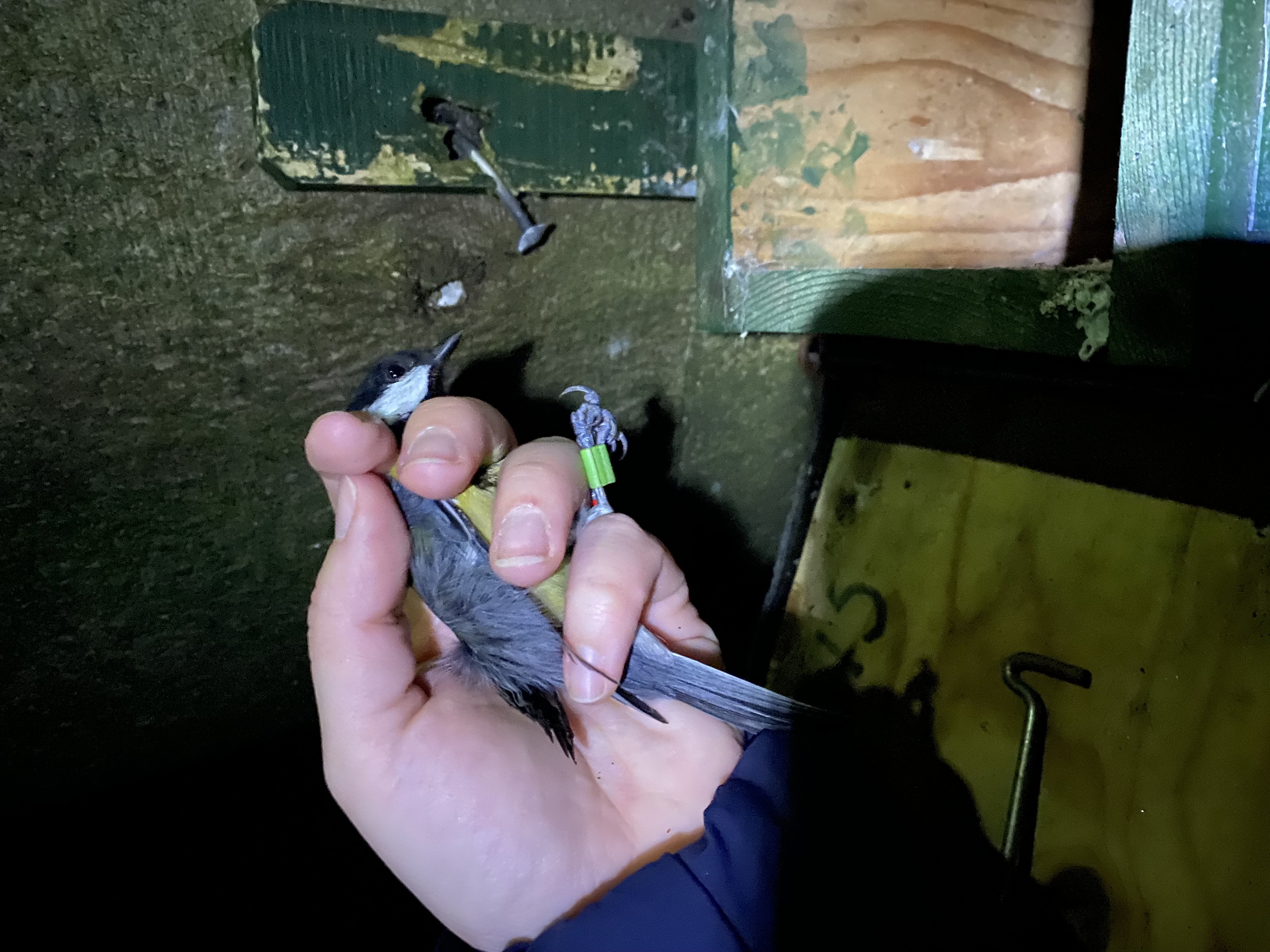
Social foraging is a common strategy used by animals to enhance food detection, while diminishing predation pressure. A key aspect of social foraging involves animals using social information in three steps: animals can (1) acquire information about a food patch, (2) approach it, and (3) exploit the food. However, individual differences (e.g., sex) may constrain which animals successfully complete each of these steps. For example, subordinates can be displaced from food patches, and thus may not be able to exploit a food source despite having knowledge of its location. In the long term, this between-individual variation in foraging strategies can have consequences for the species and broader ecological community. Currently, there is little known about how biases in social information use shape foraging strategies of wild animals.
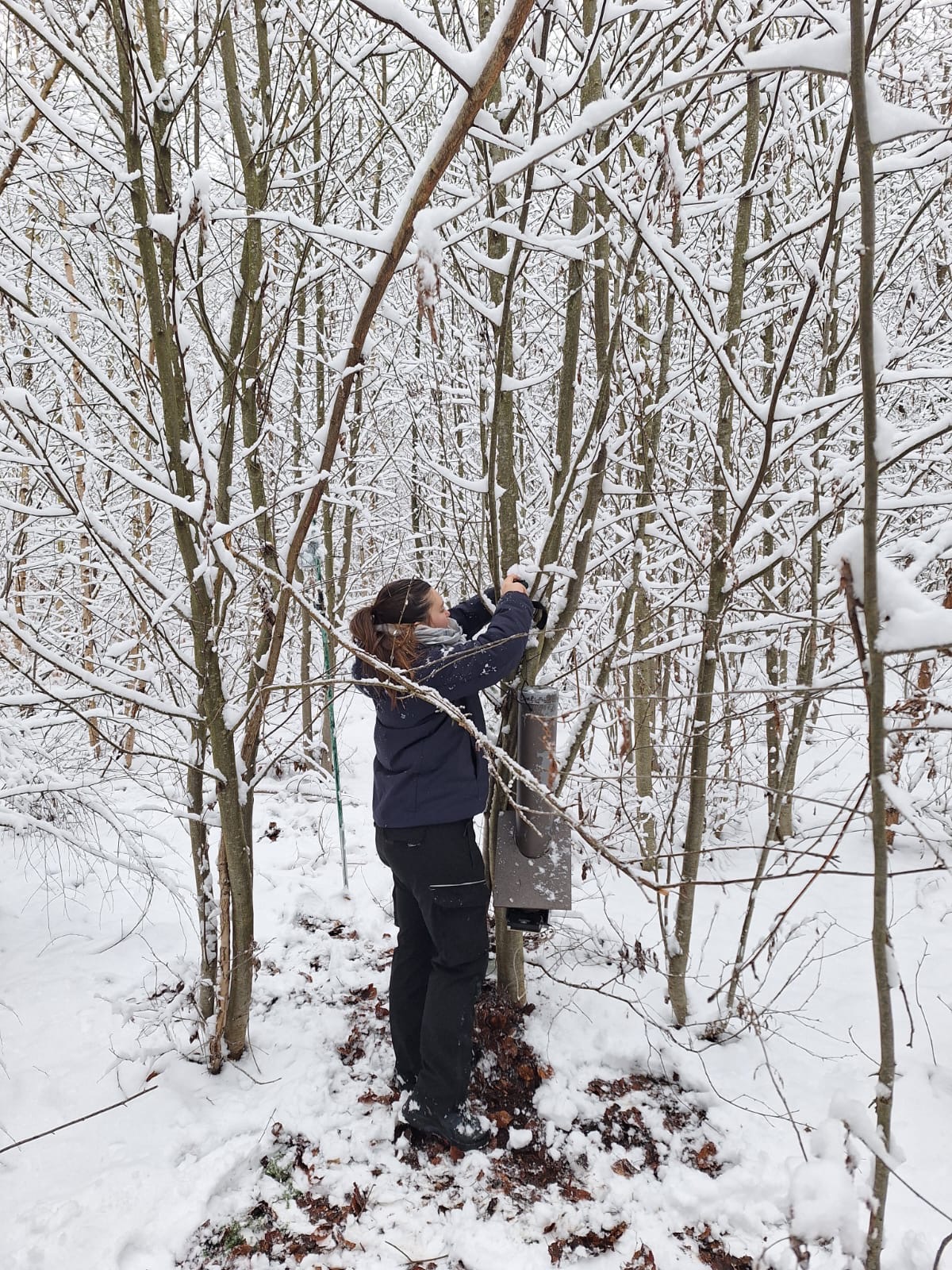
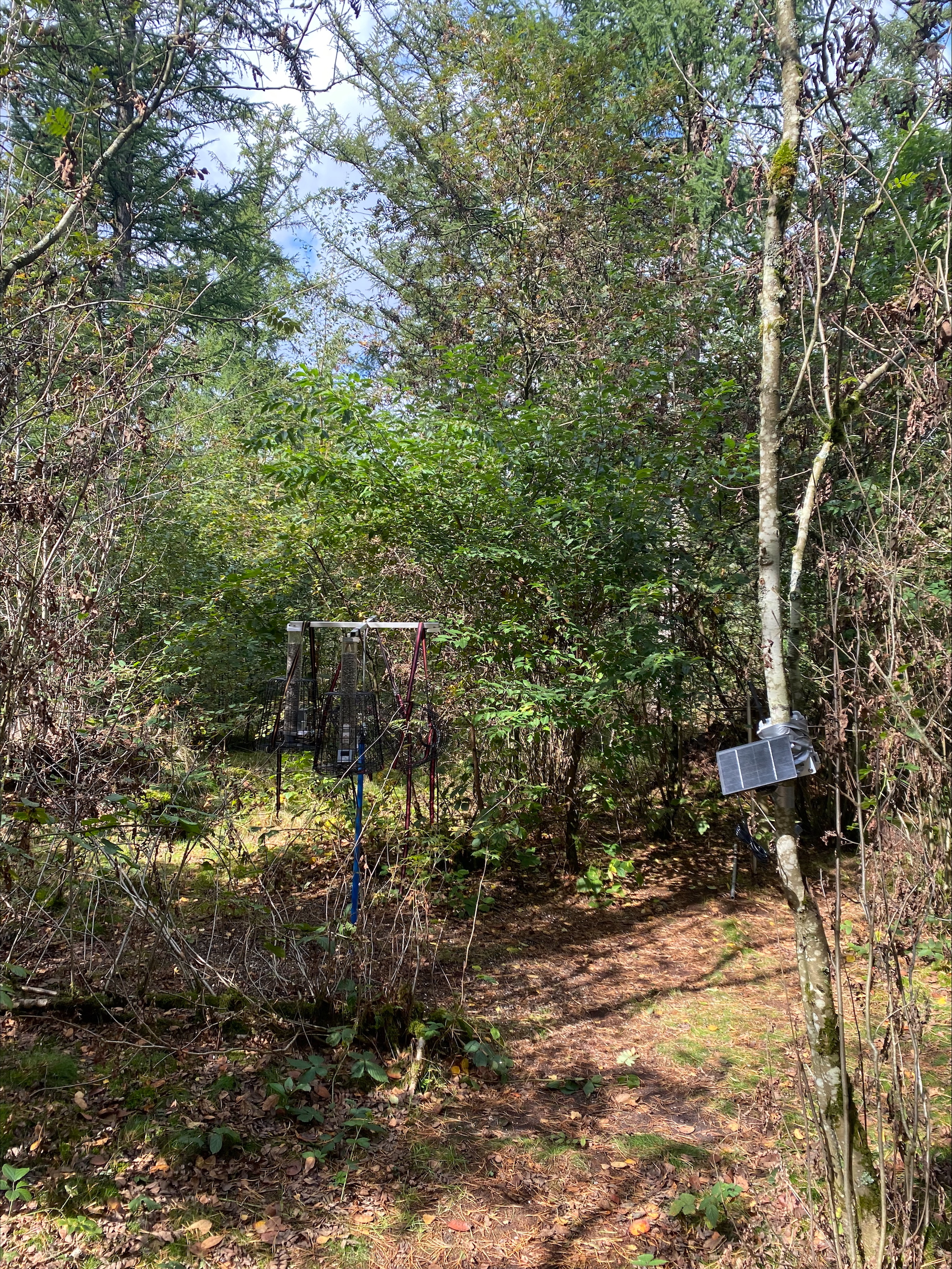
In my PhD project, I study great tits (Parus major) as a model species to investigate which individual factors facilitate the sharing and successful use of social information. Specifically, I focus on how dominance-related traits (i.e., sex, etc.) affect foraging strategies of wild great tits of the Westerheide population (Netherlands). I conduct fieldwork during the non-breeding season (autumn-winter). I combine different data collection methods to try and build a picture of how great tits forage: using RFID feeders to track their feeding behaviour, radio-tracking their movements and analysing their acoustic signals. Ultimately, this project aims to help behavioural ecologists understand how different individual characteristics shape the foraging strategies by which animals acquire enough food to survive in complex contexts.
Supervised by Lysanne Snijders (WUR); Co-supervised by Chris Tyson (WUR); Co-promotors: Kees van Oers (WUR/NIOO-KNAW) & Marc Naguib (WUR).
