Search
Filter by
Type
Tags
Dossiers
Themes
Departments
Active filters
1072 search results
Search results
-
Rewilding Expertise Centre
Rewilding is increasingly applied across the world to stimulate biodiversity recovery, improving ecosystem functioning and mitigate and adapt to climate change. There is increasing experience with rewilding in practice and through research. To synthesize this information, identify knowledge gaps and make knowledge on rewilding available, the Rewilding Expertise Centre started in September 2025. Over time the Rewilding Expertise Centre aims to grow into a network of rewilding researchers, practitioners and any holders of knowledge on rewilding and function as a knowledge hub for rewilding information and education.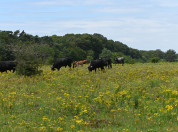
-
Abbey Marcotte
Postdoc
-
Celebrating the first World Lake Day with water research & water news
"We celebrate all things that lakes do for us and spotlight the problems of pollution, climate change and biodiversity loss that threaten their ecological integrity," states Suzanne McGowan, NIOO's department head of Aquatic Ecology on the first UN World Lake Day.
-
Erik Lindemann
PhD Candidate
-
Towards Orchid Propagation that is Free of Microbial Contamination: Green and Sustainable Solutions (TOP-MASS)
Cleaner, Greener Orchid Propagation: Tackling Microbial Contamination Sustainably. Orchids are not only beautiful - they're big business. The Netherlands produces around 134 million orchids each year, worth an estimated 550 million euros. But behind the scenes, growers face a hidden threat: microbial contamination during the production of young orchid plants.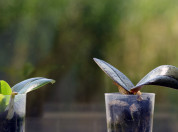
-
Cordovez Research Group
Plants host a rich community of microorganisms on and within their leaves, collectively known as the phyllosphere microbiome. These microorganisms can enhance plant performance by supplying nutrients, protecting against pathogens, and helping plants cope with environmental stresses. Despite their importance, the diversity and functions of many of these microorganisms, especially phyllosphere yeasts, remain poorly understood. -
CLIMET: Climate feedbacks and methane cycling in Arctic lakes - enzymes to atmosphere
Arctic lakes are important hotspots for the microbially- mediated production and cycling of methane (CH4), a potent greenhouse gas. The Arctic is warming nearly four times faster than the global average, changing polar ecosystems and with it the potential for positive or negative climate feedback effects. Rising temperatures are changing terrestrial vegetation cover, melting permafrost soils, and increasing glacial discharge from ice caps and ice sheets. Consequently, CLIMET focuses on two potential drivers of lake CH4 cycling in West Greenland that are changing rapidly as Arctic ecosystems change.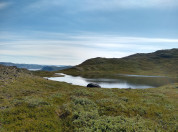
-
Samin Farhangi
Postdoc
-
Fleur van Crimpen
Postdoc
-
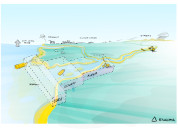
Delta-ENIGMA
Delta-ENIGMA provides infrastructure for intensive field and experimental laboratory research to understand how organisms, currents, waves, water discharge and sediment transport jointly shape the Dutch delta-landscape. This integrated approach, known as biogeomorphology, lies at the core of Delta-ENIGMA. The program serves as the Dutch contribution to DANUBIUS-RI, a European research infrastructure for studying river-delta-coastal systems. The consortium members are Utrecht University, TU Delft, University of Twente, Wageningen University & Research, Royal Netherlands Institute for Sea Research (NIOZ), Deltares and TNO. Delta-ENIGMA is coordinated by the Department of Physical Geography at Utrecht University.