Search
Filter by
Type
Tags
Dossiers
Themes
Departments
Active filters
1032 search results
Search results
-
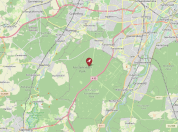
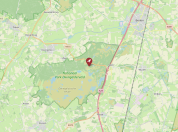
NutNet Planken-Wambuis
Two of the most pervasive human impacts on ecosystems are alteration of global nutrient budgets and changes in the abundance and identity of consumers. In spite of the global impacts of these human activities, there have been no globally coordinated experiments to quantify the general impacts on ecological systems. The Nutrient Network (NutNet) is a grassroots, global research effort to address these questions within a coordinated research network comprised of more than 130 grassland sites worldwide.
-
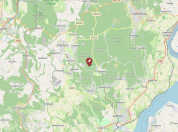
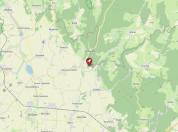
Veluwe grassland plant collection
This is a systematic collection of eight plant species from five grassland sites in the Veluwe, for which some tissue from individual plants is stored at -80 °C. For each site, up to 10 individuals from each species have been sampled along a transect at two time points (late May and early August).
-
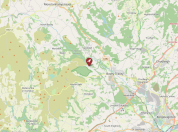
CLUE field Veluwe + database
Since 1995, we run a series of biodiversity experiments on a former agricultural field in the nature area Planken-Wambuis near Ede. In some plots, secondary succession has followed its natural course, In other plots, a low or high diversity of plants was sown, or the soil has been inoculated with soil from nature areas.
-
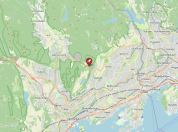
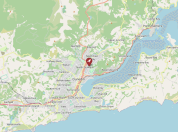
Land van Ons - Warmond
The foundation 'Land van Ons' has obtained a peat meadow area near Leiden to increase biodiversity in this intensively used agricultural area. The goal is not to recreate nature, but to develop sustainable agricultural use of this land with the goal of increasing biodiversity in the area and developing management strategies that optimise its ecological, economic and recreational value.
-
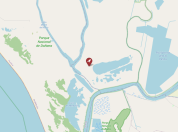
Marker Wadden
The Marker Wadden is a newly constructed archipelago in lake Markermeer, which aims to improve the lake’s degrading food web by stimulating primary productivity. The archipelago consists of five islands that add a currently missing habitat type to the lake: shallow, sheltered waters with high nutrient availability and gradual land-water transitions.
-
Fatty acids determination and quantification
Fatty acids such as Phospholipid (PLFA), neutral lipid fatty acids (NLFA) and Ergosterol (total fungal biomass) are used to assess microbial biomass and community structure in soil and other types of environmental samples. This facility provides all the equipment and knowledge required for the determination and quantification of PLFA, NLFA and Ergosterol. -
Volatile profiling and mVOCs database
Plants and microorganisms emit a wide range of chemically diverse volatile compounds. These volatiles mediate swift chemical interactions and communication in both aquatic and terrestrial environments, and carry out important ecological functions.
-
Stable isotope facility
The NIOO stable isotope facility is part of the chemical analytical lab, with equipment and facilities to perform stable isotope tracer experiments. Stable isotopes (13C) can be analysed in PLFA, gases (CO2/CH4) , (13C/15N) solid material (e.g. soil, plant material, bird feathers) as well as in DNA and RNA and breath samples of birds (D/H).
-
Greenhouse and trace gas analysis facilities
The NIOO greenhouse and trace gas analysis facility is part of the chemical analytical lab with equipment and facilities to asses gas concentrations in atmosphere or in soil gas or soil moisture. Gases (CH4, CO2, N2O, CO, H2,C¬2H4 can be measured over a wide concentration range and even to below-atmospheric levels (ppb) or in stable isotope studies (13C/12C in CO2, CH4).
-
Avian blood sample collection
Since 1994, we collect genetic samples from insects (winter moth) and birds (mainly great tit, blue tit, pied flycatcher, oystercatcher and various waterfowl). The location and specifications of a sample can be found in our relational data warehouse. There are more than 170,000 blood samples, feathers and other tissues stored at NIOO. The samples can be used to investigate the genotype of an individual or population in relation to their fenotype.