Early-life microbiome assembly and its effects on bird phenotypes
Early-life microbiome assembly and its effects on bird phenotypes
Animal EcologyContact Person:

Droevendaalsesteeg 10
6708 PB Wageningen
We are looking for a motivated Masters/HBO/internship student to partake in upcoming microbiome manipulation experiments, investigating how this fascinating community impacts phenotypes in birds. Start date of the student project can be between April and early June, with the bulk of the experiments to take place between June and August 2026.
Project Background and Objectives:
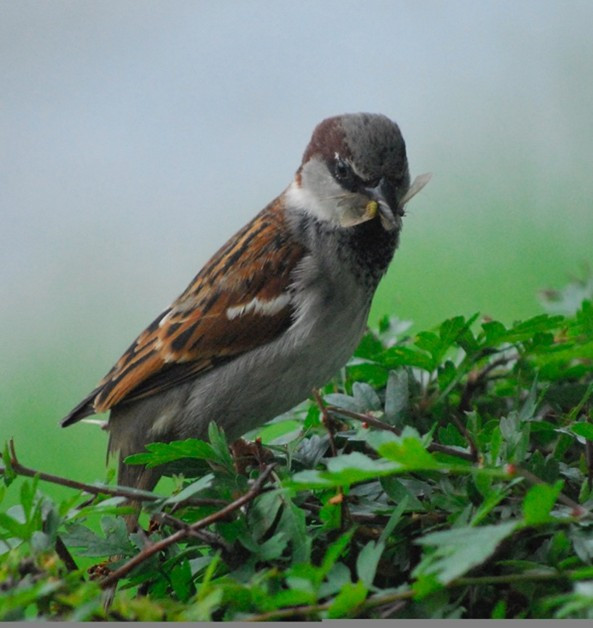
Recent research has uncovered the many ways the microbiota (the community of microbes that lives on and in animals) affects host phenotypes. This can range from aiding in digestion, modulating host immunity, to influencing animal behaviour. While early-life microbiome assembly is key for these effects to take place in mammals, not much is known about how these assembly patterns affect other groups, namely birds. In this experiment, we will incubate house sparrows (Passer domesticus) eggs under absolute sterile conditions, so that they hatch “germ-free”. We will then divide the nestlings into two groups, one that remains germ-free (i.e., without a microbiota) and one that is “conventionalized” (i.e., receives a standard sparrow microbiota). After rearing these two groups of birds for 2 weeks, we will then collect behavioural, morphological, immunological and other phenotypic data, to test how the microbiota affects these traits in nestlings. Further experiments will investigate early-life microbiome effects on adult sparrow phenotypes, with ample of opportunity for student involvement.
According to the student’s interests, there is also the possibility to develop further project ideas, in this context of comparing germ-free to conventionalized house sparrows.
Project Outline:
This project will be composed of lab work, data collection, and/or analysis. Tasks can include:
- Hand-feeding house sparrow nestlings and/or assisting others doing so;
- Collecting data arising from reared house sparrows;
- Statistical analysis of the collected data
- Presenting your findings (in written and/or oral form)
Requirements for the role:
Candidates should be curious and enthusiastic about evolutionary/ecological research, ideally also interested in how microbial communities affect animal hosts. Experience working in a lab, particularly pipetting experience or working under sterile conditions, is a bonus but not a requirement. The group’s working language is English, so a good level of written and spoken English is essential. Dutch language proficiency is not required.