Droevendaalsesteeg 10
6708 PB Wageningen
The Netherlands
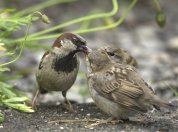
I'm a microbial/behavioural ecologist interested in how animal microbiomes shape host phenotypes and fitness. As a postdoc in the Rowe lab at NIOO, I study how reproductive tract microbiomes affect reproduction and fitness.
I've always had a keen interest in nature and wildlife, so I studied for a B.Sc. degree in Biology, at the university of Lisbon. During this time, I became fascinated by how ecology and evolution interplay to shape animal behaviour, which led me to pursue a M. Sc. in Evolutionary and Developmental Biology, also at the University of Lisbon, where I studied two-spotter spider mite mating behaviour. I then moved to the University of Zurich where I did my PhD on the evolution and ecology of siderophore-based cooperation and conflict in microbial communities. During this time, I grew very interested in the evolution of symbiosis and how microbial communities affect their hosts. During my first postdoc, at the University of Oxford, my research focus was how natural variation in microbiome composition affect animal behaviour in wild (house mouse) populations. Now, at NIOO, I'm investigating how variation in microbiome composition affects reproduction and fitness, using house sparrows as a model system.