From the Wadden Sea to Taimyr: tracking the journeys and challenges of brent geese

From the Wadden Sea to Taimyr: tracking the journeys and challenges of brent geese
PhD in progressWritten by

Every spring, brent geese undertake remarkable journeys from temperate regions to the Russian tundra. Along the way, they face constant challenges, needing to balance their body condition with precise timing to ensure both survival and successful reproduction. These challenges are likely to grow even greater in a rapidly changing climate, particularly in the Arctic, where shifting conditions can affect their migration and breeding success.
If you trace a route from southern Africa all the way to the high Arctic, there’s one crucial stop you might overlook: the Wadden Sea. Especially in spring, this relatively small intertidal area becomes one of the most important sites along the East Atlantic Flyway. Here, countless migratory birds prepare (a nicer word for ‘fatten up’) for their long journeys north, and the conditions they encounter in the Wadden Sea can strongly influence later stages of their annual cycle.
My PhD research at the Netherlands Institute of Ecology (NIOO-KNAW), in collaboration with the Institute for Biodiversity and Ecosystem Dynamics at the University of Amsterdam (IBED-UvA), focuses on understanding which specific conditions in the Wadden Sea affect migratory birds, what ecological mechanisms are involved, and how we can use this knowledge to maintain - or even improve - the value of the Wadden Sea for these species. I focus on the dark-bellied brent goose (Branta bernicla bernicla), undoubtably the most beautiful species to study, which is one of the species within the overarching Waakvogels project.
Tracking our geese
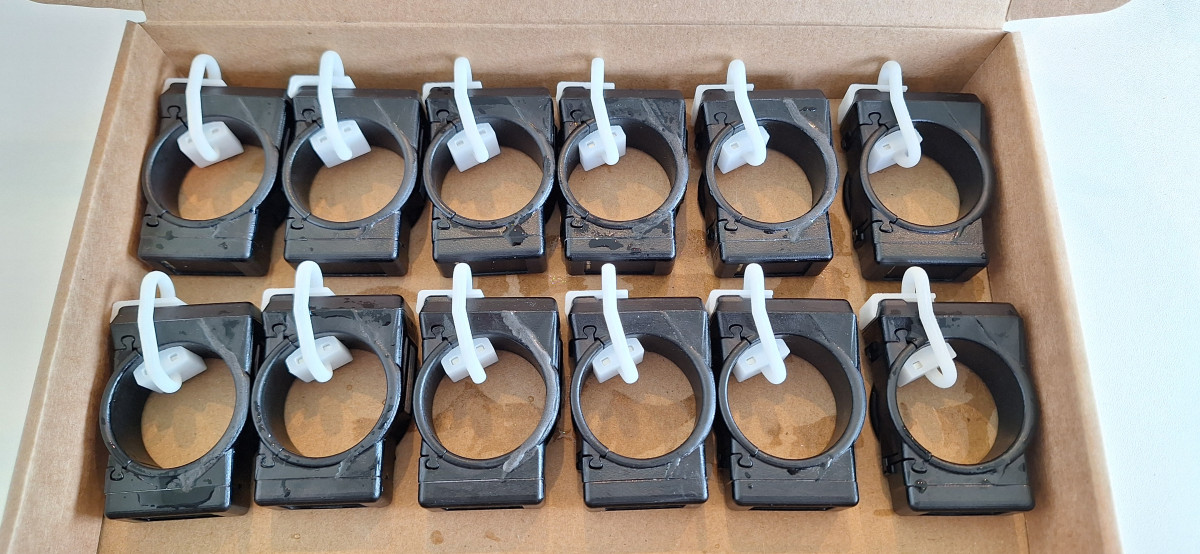
But how can we study the effects of Wadden Sea conditions on individual brent geese months later and thousands of kilometers away on the Russian tundra, where they breed and moult on the Taimyr peninsula? While historically we relied mainly on direct observations such as spotting birds, we now also use high-resolution tracking devices. Building on previous studies and experiences, we caught brent geese on the Dutch island of Terschelling between 2023 and 2025 and equipped them with these trackers. These transmitters now provide additional detailed data on where the geese are exactly and what they are doing throughout the year.
Disentangling the complex ecological reality
Using these complementary data - and luckily, sometimes we are still needed in the field for direct observations - we can now link behaviour such as foraging activity in the Wadden Sea to migration timing and - to some extent - reproduction. Examples for migration timing include departure dates or stopover decisions, such as when, where, and for how long to stop along the route. Examples for reproductive outcomes are whether an individual initiated and potentially completed breeding, which we can derive from transmitter movement, or the number of offspring accompanying the parents when they return to the wintering grounds. However, as is often the case in ecology, reality is complex. Birds experience multiple, often interrelated environmental factors, making it challenging to disentangle cause and effect. This very challenge drives my motivation: to understand these links and reveal how local changes in the Wadden Sea can influence Arctic migrant birds.