The heartbeat of the forest: how beechnut production affects the forest community

The heartbeat of the forest: how beechnut production affects the forest community
PhD in progressWritten by

Imagine your favourite food is available in enormous quantities in one year, but nowhere to be found the next. For many of us this sounds like a highly unlikely scenario, at least for humans, but it is the reality for many animal species living in the forest that are highly reliant on the fruits of masting plants.
When plants produce an overabundance of seeds one year, followed by years with hardly any seeds, that is called masting (or mast seeding). Such variation in food availability causes fluctuations in the population size of species that use these seeds as their main food resource. Since these species are part of a larger ecosystem, variation in their population sizes also affects other species, like their predators, and causes fluctuations in the population sizes of these predators themselves. This way, changes in the availability of something as small as a seed can have widespread effects on a large part of the forest community. While simple interactions between species are often well studied, it remains unclear how changing food availability through masting affects the wider network of species in the forest.
Fifty years of beechnuts
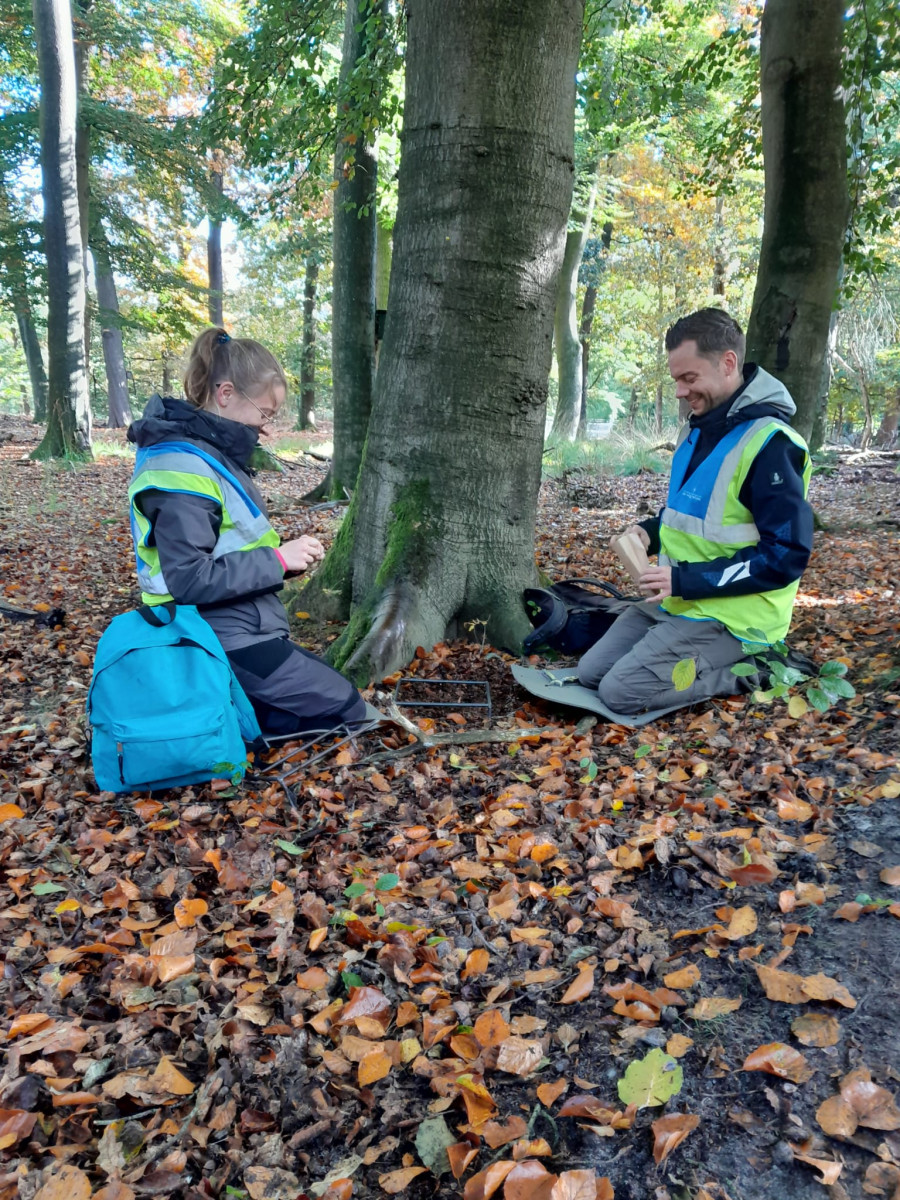
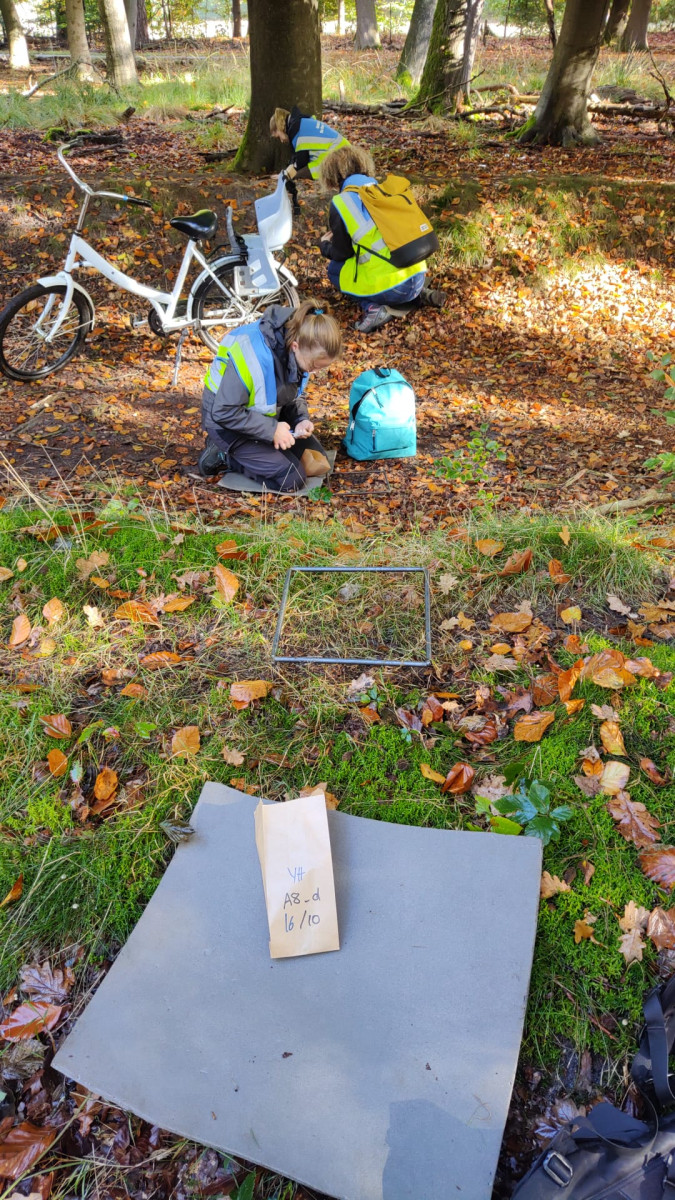
In my PhD project I focus on beechnuts, the seeds of European beech (Fagus sylvatica). This tree is an important forest forming, masting species in Central Europe. At the Netherlands Institute of Ecology (NIOO-KNAW), we have been collecting these small nuts every autumn, for 50 years already! This gives me a large dataset on annual beechnut production, which we can use to understand which climate factors influence masting and how masting has changed over time. To assess how changes in beechnut availability affect the forest community, I am diving deep into articles from other research projects to find all relevant animal species in the forest that are interacting with beechnuts, either directly (e.g., by eating them, such as wood mouse, great tits, nuthatches, chaffinches or wood pigeons) or indirectly (e.g., by eating the species that eat beechnuts, such as martens, foxes, owls or birds of prey). With this knowledge I can build a species interaction network and analyse how changes in the abundance of one species affect the species that are linked to it, and thereby also how beechnut availability affects the network.
Masting patterns change with climate
Beech masting is driven by climate factors, such as temperature and precipitation, which makes it highly susceptible to climate change. We have already been seeing clear changes in seed production over the last two decades: beechnuts are produced every year (instead of every other year), but in smaller quantities and many of these nuts are empty, which is caused by unsuccessful pollination. This not only makes them useless for seed consumers, as only full nuts have nutritional value, but also for the trees, as new seedlings can only develop from full, viable seeds.
Three things could happen as a consequence of these changes:
- For seed consumers, it could be beneficial to have seeds every year as that can increase their chance of survival, but when a majority of these nuts is empty, this effect will be small.
- For the beech trees, more empty seeds mean a lower probability of establishing a seedling, which reduces their reproductive success.
- If seed consumers become more abundant through a more stable seed availability, this can increase seed predation and thereby reduce the number of seeds from which a seedling can emerge even more.
So far, these are only hypotheses which is why the main goal of my PhD project is to understand how recent climate change is already affecting masting today to ultimately predict how climate change will further impact masting and the forest community in the future. This knowledge will help us to understand how climate change can shape our forests and policy makers and nature managers to develop management plans both for animal species and trees.