

Van Dis group
Van Dis group
Animal Ecology


Research in the Van Dis Group focuses on understanding population responses to rapid environmental change so that we can predict when and how populations can persist. We are particularly interested in the role that evolution will play to bend the curve of ongoing biodiversity losses. Our projects aim to identify drivers and constraints that determine the rate of adaptation, by assessing population adaptive potential of different species and by leveraging unique long-term ecological datasets to test for realized genetic change over time.
Research topics and methods
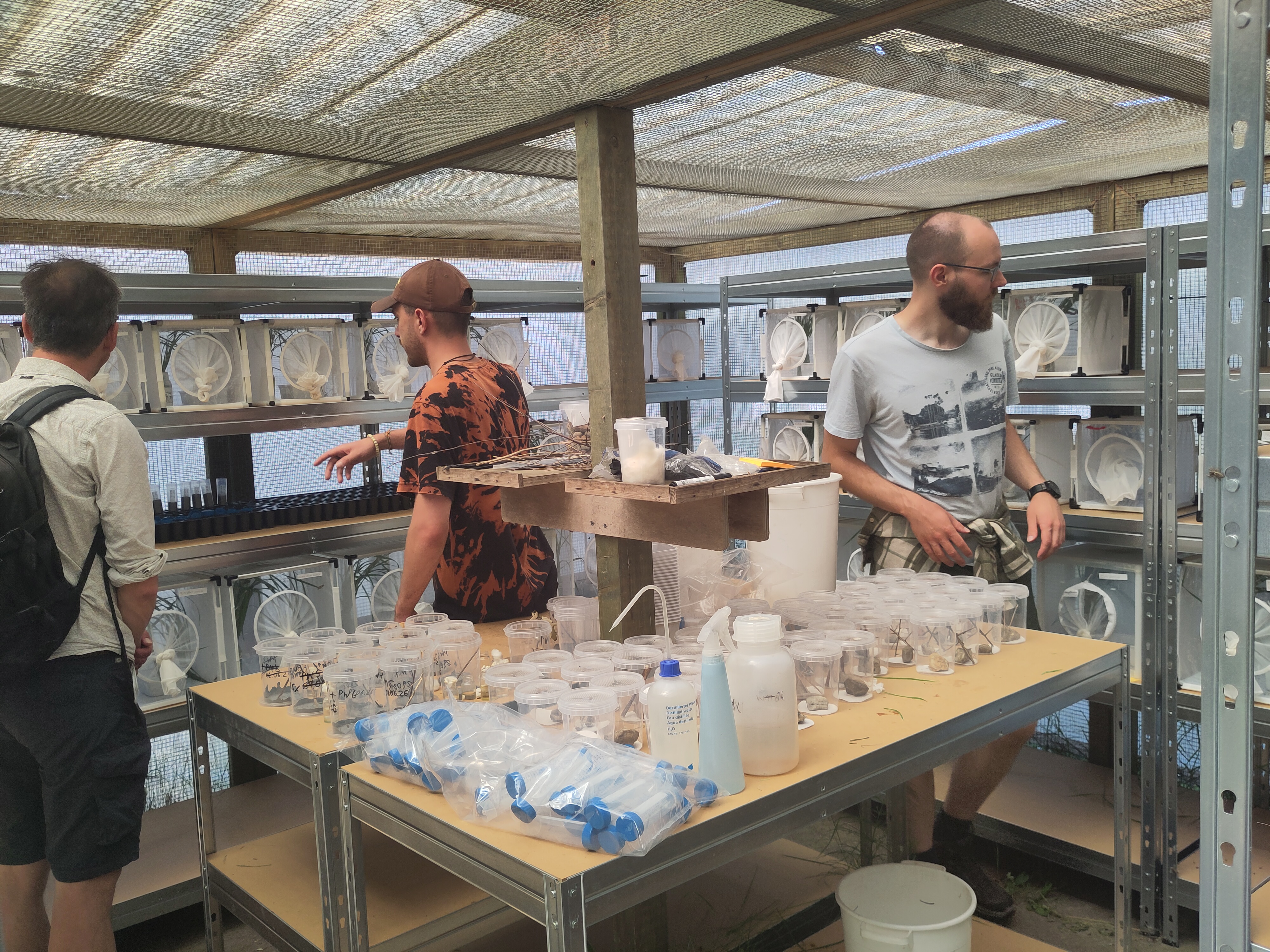
Our work is primarily focused on the impact of climate change on insect populations and we use a variety of methods to assess the likelihood that populations will adapt in time – combining field monitoring with microscopy, experiments, population models, functional genetics and genomics. Our research topics include seasonal timing and phenological mismatch, temperature sensitivity of development rate, eco-evolutionary dynamics, buffering mechanisms, polygenic adaptation, and space-for-time substitutions.
Genetic adaptation to climate change in the winter moth
One of our main model species is the winter moth (Operophtera brumata) for which we have collected unique fine-scale time-series data at the phenotypic and genotypic level, covering its adaptation to climate change in real-time. Read more about the winter moth here.
Collaboration and Open Science
The Van Dis Group values a collaborative and supportive research environment and strongly believes in open, reliable and transparent research practices: to ensure research integrity and reproducibility, and to safe-guard and stimulate reusability of the valuable ecological data we collect. Interested in joining the group? Contact us to discuss opportunities.